
Greyhound Welfare in UK Racing: Injury Data, Retirement and the 2026 Report
Best Greyhound Betting Sites – Bet on Greyhounds in 2026
Loading...
In 2026, the Greyhound Board of Great Britain recorded an injury rate of 1.07% across 355,682 individual race starts — the lowest figure in the history of its measurement programme. On-track mortality stood at 0.03%, half the rate logged in 2020. Those are the welfare numbers that define the current state of licensed UK greyhound racing, and they tell a story of measurable improvement over the past six years.
But the numbers do not stand alone. Critics, including parliamentary voices and animal welfare organisations, point to the absolute figures behind those percentages: thousands of injuries and hundreds of deaths across the measurement period. The debate is not about whether progress has been made — even the sport’s sharpest opponents acknowledge the trend lines — but about whether the current level is acceptable and whether the pace of improvement is fast enough. For a sport that generates £164 million annually for the UK economy and employs 5,400 people, according to GBGB figures, the welfare question is inseparable from the economic and regulatory questions surrounding its future. This article sets out the 2026 data, the retirement infrastructure built around it, and what it all means for anyone who follows or bets on the sport.
2026 Injury and Mortality Data in Detail
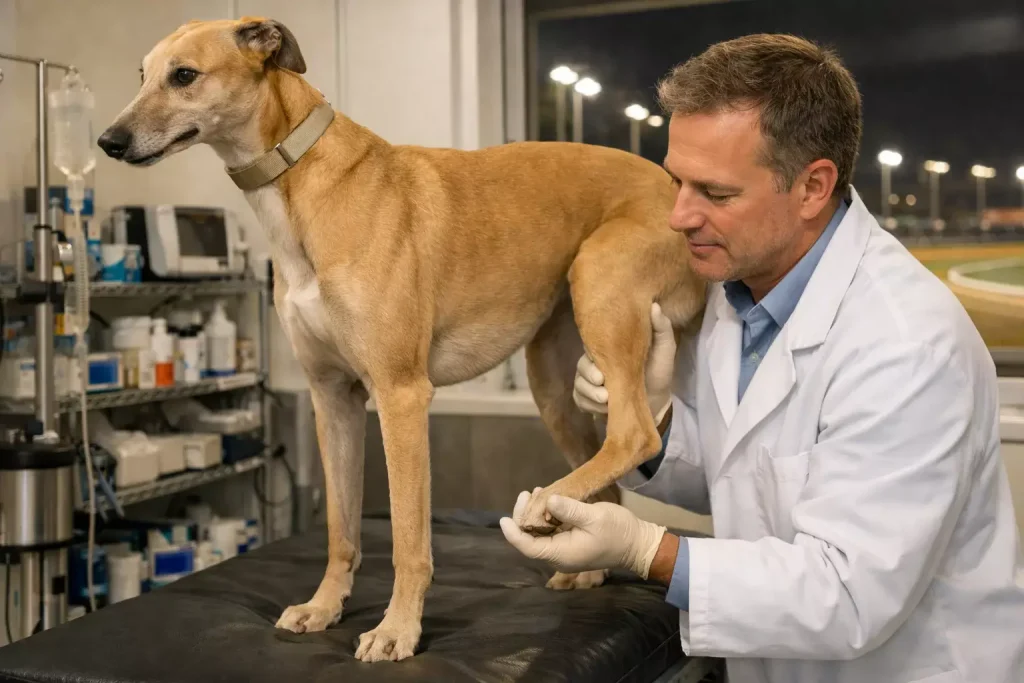
The GBGB’s 2026 injury and retirement data release provides the most granular picture of welfare outcomes in the sport. The headline figures are clear: 3,809 injuries were recorded from 355,682 starts, producing the 1.07% rate. On-track fatalities occurred at a rate of 0.03%. The retirement success rate — the percentage of licensed greyhounds that are successfully rehomed or retained as pets at the end of their racing careers — reached 94%, up from 88% when comprehensive tracking began in 2018.
Perhaps the most striking number concerns economic euthanasia — putting a healthy greyhound down because the owner or trainer cannot justify the cost of keeping it. In 2018, 175 dogs were destroyed for economic reasons. In 2026, that figure fell to three. Mark Bird, Chief Executive of the GBGB, described the progress since 2018 as significant, noting that the initiatives introduced in recent years are now embedded across the sport. He has been particularly clear that the Board considers economic euthanasia unacceptable and views the 98% reduction as evidence that the industry’s welfare strategy is producing real change.
The counter-narrative comes from organisations like Blue Cross and from a parliamentary perspective. An Early Day Motion tabled in the House of Commons cited data showing that more than 4,000 greyhounds died or were put down between 2017 and 2026, with over 35,000 injuries recorded in the same period. Those absolute numbers are substantially larger than the annual percentages might suggest, because the industry runs hundreds of thousands of race starts each year across its 18 licensed stadiums. A 1.07% injury rate, applied to 355,682 starts, still produces nearly 4,000 injuries in a single year.
Neither side of this debate is wrong on the facts. The percentage trend is downward and sustained. The absolute numbers remain high because the volume of racing is enormous. For anyone assessing the state of welfare in UK greyhound racing, both perspectives are necessary. The GBGB’s data shows a sport that is measurably safer than it was six years ago. The parliamentary data shows a sport where thousands of injuries still occur annually. How you weigh those two truths depends on your starting position — but the data itself is not in dispute.
Greyhound Retirement Scheme: £5.6 m and 12,500 Dogs Homed
The Greyhound Retirement Scheme, launched in 2020, is the industry’s primary mechanism for funding post-racing life. Since its inception, the GRS has distributed more than £5.6 million to homing centres across the UK, supporting the placement of over 12,500 retired greyhounds into permanent homes. The money flows from the BGRF (British Greyhound Racing Fund), which in turn is funded by voluntary bookmaker contributions calculated at 0.6% of their greyhound betting turnover.
The scheme operates through a network of approved rehoming organisations, the largest of which is the Greyhound Trust. These centres assess retired dogs for temperament and health, provide any necessary veterinary treatment, and match them with adoptive families. The process is not instant — a greyhound transitioning from a racing kennel to a home environment needs adjustment time, and the centres manage that transition carefully. Some dogs are rehomed within weeks; others, particularly those with minor injuries or socialisation needs, may spend several months in the system.
The financial model behind the GRS is worth understanding because it connects directly to the betting market. Every pound wagered on greyhounds contributes — via the bookmaker levy — to the fund that pays for rehoming. When betting turnover falls, as it has over the past three years, the money available for welfare programmes falls with it. The BGRF collected £6.75 million in 2026-25, down from £7.3 million the year before. That decline has not yet forced cuts to the GRS, but the arithmetic is tightening. The introduction of a statutory gambling levy in 2026, which raised approximately £110 million across all gambling sectors, may eventually provide an additional funding stream — though greyhound-specific allocations from that levy are not yet confirmed.
The 94% retirement success rate is the scheme’s most visible achievement, but it also highlights the gap that remains. Six percent of licensed greyhounds — several hundred dogs each year — do not achieve a successful retirement outcome. Some are euthanised due to untreatable injuries. Others fall through gaps in the system, particularly at the interface between licensed and unlicensed racing, where GBGB tracking does not apply. The welfare organisations pushing for improvement acknowledge progress while arguing that any number short of 100% represents dogs that the industry has failed.
Why Welfare Data Matters to Punters
Welfare is not an abstract topic for bettors — it has direct implications for the sport they wager on. The most obvious connection is regulatory. If welfare standards deteriorate or public perception turns sharply negative, the legislative environment changes. Wales has already voted to ban greyhound racing; Scotland is advancing its own bill. In England, the government has stated it has no plans to ban the sport, but that position depends on continued welfare improvement. A significant scandal or a reversal of the current data trend could alter the political calculation quickly.
On a more practical level, welfare standards affect track conditions and race quality. A track that invests in surface maintenance, veterinary oversight and proper grading runs safer races — which means fewer abandoned meetings, fewer void races and more reliable form data. Towcester’s recent investment in 300 tonnes of new sand and upgraded maintenance equipment is a tangible example: better surface conditions reduce injury risk and produce more consistent going, which in turn makes form analysis more predictable.
There is also an ethical dimension that each punter resolves individually. Being informed about the welfare numbers — the improvements and the remaining concerns — is part of engaging with the sport honestly. The data in this article is drawn from official sources and presented without advocacy in either direction. What you do with it is your decision, but making that decision on the basis of facts rather than assumptions is the minimum standard any serious follower of the sport should set for themselves.