
Towcester Dog Results: Complete Guide to Greyhound Racing at Towcester
 Available in US
Every trap. Every time. Towcester decoded.
Data-driven resource for UK greyhound bettors covering race times, trap stats, Derby history, trainer records and racecard analysis.
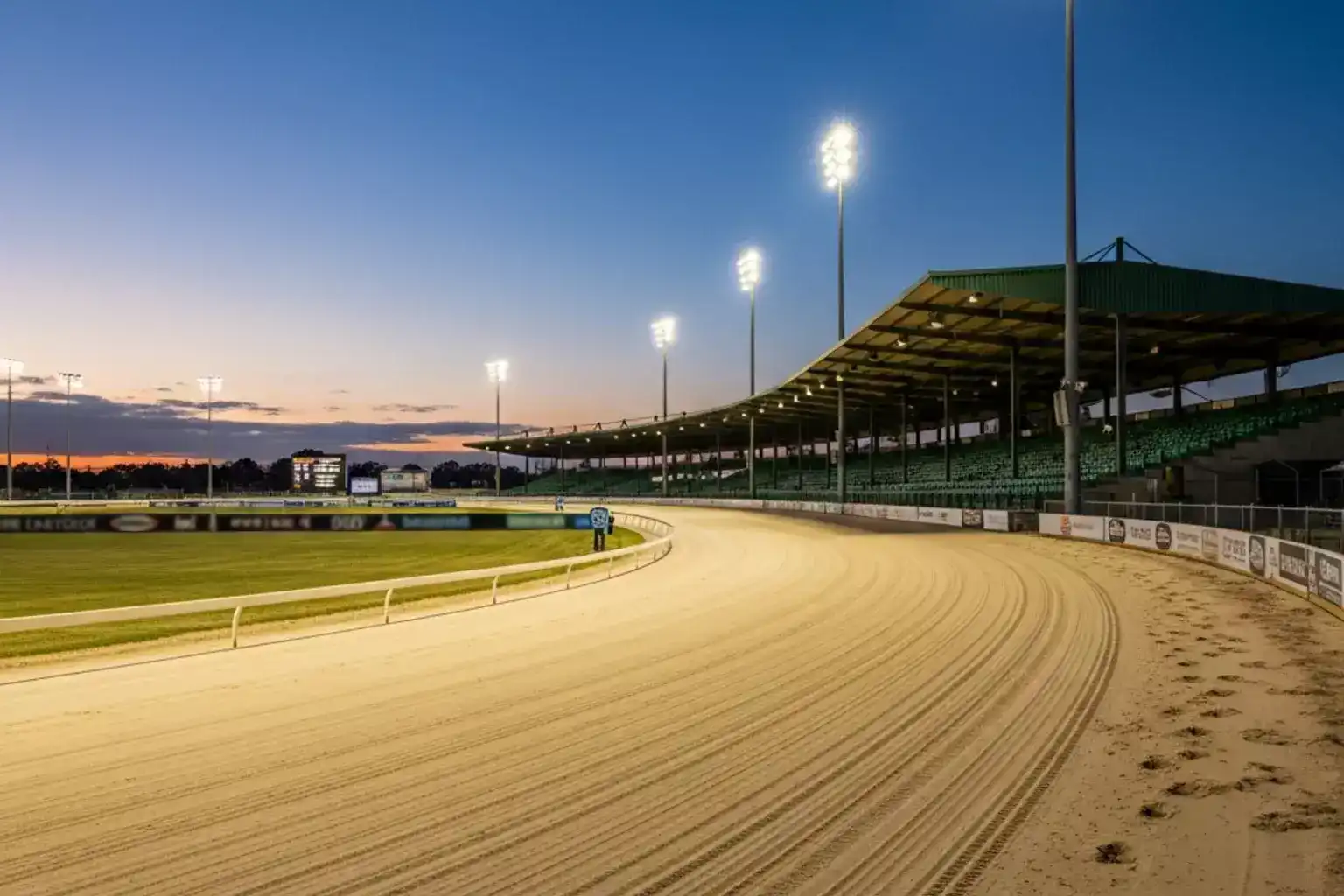
Towcester Greyhound Stadium is the only purpose-built greyhound track opened in the United Kingdom since Harlow in 1995. Constructed inside the existing Towcester Racecourse at a cost of £1.5 million in 2014, the venue now hosts five meetings a week and serves as the permanent home of the English Greyhound Derby — the richest greyhound race on the planet. If you are looking for Towcester dog results, form data, or an analytical edge before your next bet, everything funnels through this track.
The sport itself contributes £164 million a year to the UK economy and supports 5,400 jobs, according to GBGB Commercial Director Mark Moisley, who describes greyhound racing as "enshrined in British culture" and one of the top ten spectator sports in the country. Total prize money across British greyhound racing has reached £15.7 million, a figure that underlines the competitive depth available to punters who know how to read results and interpret form.
Since November 2025, Towcester has operated under new management. Orchestrate, the company owned by Mike Davis, took over the venue on a ten-year lease, replacing the previous Henlow Racing regime run by Kevin Boothby. Richard Thomas was appointed Chief Executive of Towcester Racecourse to lead the operation. The transition has already brought tangible changes: a revamped racing surface, upgraded maintenance equipment, and the shift to a full five-day PGR schedule. For bettors, that means more data, more races, and more opportunities to find value every week.
This guide is built for punters who want to move beyond casual glances at finishing positions. We decode Towcester — from track geometry and trap bias to trainer records and Derby trends — so that every result you read tells a fuller story. Whether you are studying today's racecard or reviewing yesterday's form, the numbers start here.
What Punters Need to Know About Towcester in 2026
- Towcester is the UK's only purpose-built greyhound track since 1995, featuring a unique 6-metre gradient that reshapes every race — stamina dogs thrive, front-runners fade.
- Trap 1 wins roughly 20% of all races, well above the 16.6% theoretical average. Factor the draw into every selection, particularly on sprint distances.
- The 2025 surface overhaul — 300 tonnes of fresh sand and new maintenance equipment — means pre-2026 calculated times are not directly comparable. Treat early-season form as provisional.
- The English Greyhound Derby paid £175,000 to the winner in 2025; the 2026 edition carries a £125,000 prize. Only one favourite has won the final in thirteen years. Seven of thirteen winners were priced at 5/1 or longer.
- Five PGR meetings per week now generate over 50 races of fresh data every seven days — more opportunities to identify value, but also faster form cycles to keep up with.
Inside Towcester Greyhound Stadium: Layout, Surface and the 2025 Overhaul
Most greyhound tracks in Britain evolved from pre-war speedway grounds or multi-purpose stadiums. Towcester is the exception. The track was designed from scratch and installed within the grounds of a horse-racing venue, which gave architects the luxury of wide bends, a generous run-in, and a layout that prioritises both racing spectacle and dog safety. The circuit measures 420 metres in circumference with a 6-metre climb to the finishing straight — a gradient that is unique among the 18 licensed GBGB stadiums operating in the UK. That uphill finish is the single most important variable when analysing Towcester dog results, because it punishes front-runners who run flat out through the first bend and rewards dogs with stamina reserves.
Building the track required the movement of 60,000 tonnes of earth to create the gradient profile, and the resulting surface has been a subject of constant refinement ever since. The bends are notably wide — capable of accommodating up to eight dogs abreast — which is part of the reason Towcester was selected to host the English Greyhound Derby, where fields are larger and crowding on the first bend can decide a race.
When Orchestrate assumed control in late 2025, the new management identified surface quality as the top priority. According to Racing Post, approximately 300 tonnes of fresh sand were added to the racing surface, and the stadium invested in a fleet of new maintenance machinery including tractors, graders, harrows, rotavators and water bowsers. "We have not been afraid to go right back to the basics with the surface," said James Chalkley, Head of Racing at Towcester. "The extra sand and revised maintenance regimes are about delivering a track that is as safe as possible for the greyhounds to run on."
The practical effect for punters studying Towcester greyhound results is significant. A resurfaced track alters going conditions, which in turn shifts calculated times and form comparisons. Dogs that posted quick times on the old surface may find themselves running slower on fresh, deeper sand, while stamina-laden runners could benefit from the additional grip. Any serious form study in the spring 2026 season needs to account for this surface change — historical sectional times from 2024 are not directly comparable without adjustment.
Richard Thomas, CEO of Towcester Racecourse, described the partnership as "another exciting step in the ongoing development of Towcester Racecourse." The ambition extends beyond maintenance: plans are in progress to introduce a new race distance of approximately 460 metres, which would fill the gap between the 260-metre sprint and the standard 480-metre trip. If implemented, it would give trainers and racing managers another option for grading and give bettors yet another distance profile to analyse.
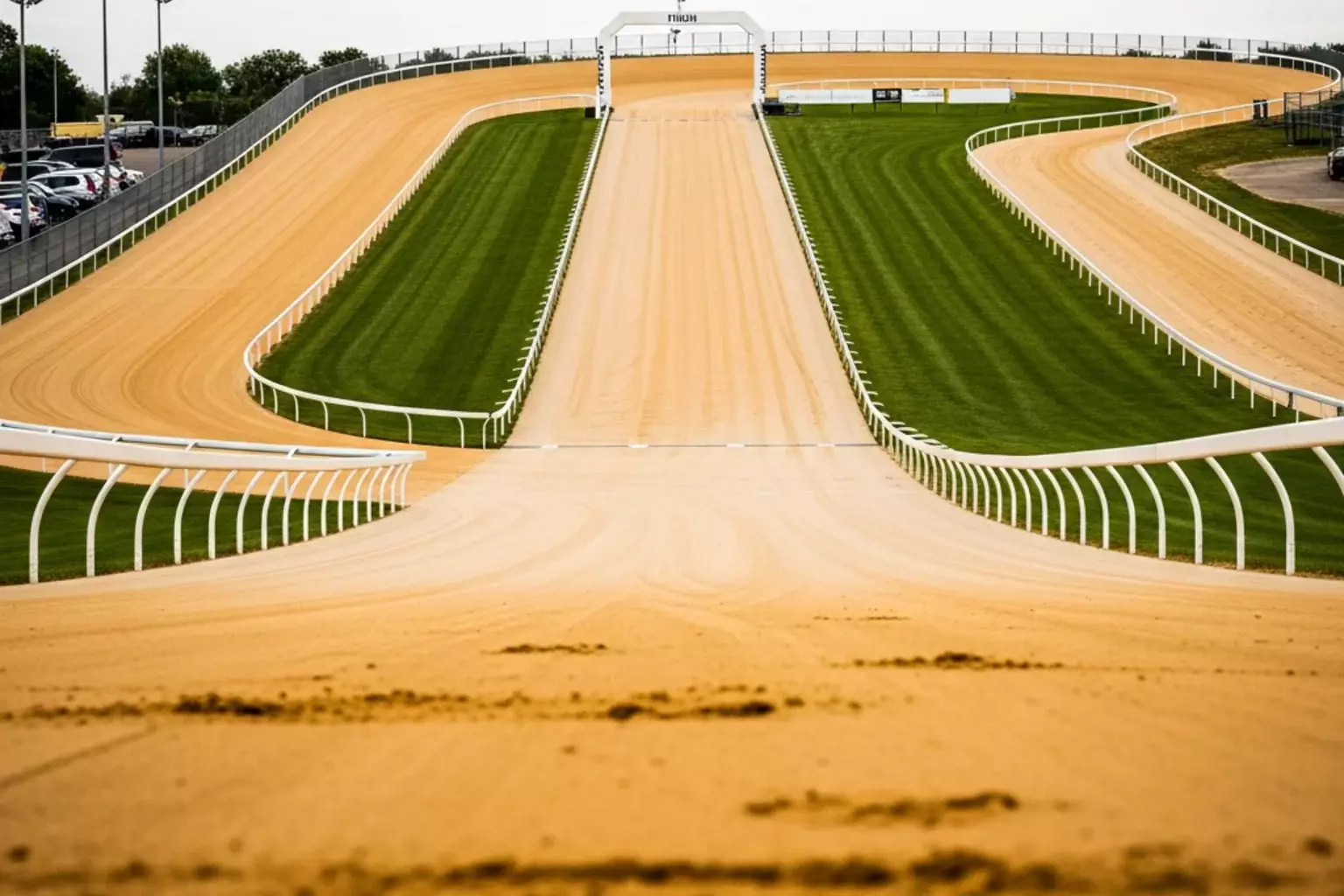
Towcester's 6-metre gradient and wide-bend design make it unlike any other UK track. The 2025 surface overhaul has reset the baseline — treat pre-2026 calculated times with caution until new benchmarks are established.
The current 500-metre track record stands at 28.44 seconds, set by Barntick Bear in October 2024. That time was posted on the pre-overhaul surface, and whether it survives the new conditions remains an open question heading into the 2026 Derby season. For punters, the record serves as a useful benchmark: any dog running within half a second of that mark on the refreshed surface is operating at an elite level.
Race Distances at Towcester: From 260 m Sprint to 906 m Marathon
Towcester offers six race distances: 260 m, 480 m, 500 m, 655 m, 686 m and 906 m. That range is broader than most British tracks, and each distance tests a different set of physical and tactical attributes. Understanding what each trip demands is fundamental to reading Towcester greyhound results with any depth.
The 260-metre sprint is a single-bend dash where early pace and trap position dominate. There is minimal time for a slow starter to recover, and the inside traps carry an outsized advantage because the dog hugs the rail through the only turn. At the opposite end of the spectrum, the 906-metre marathon requires two full circuits plus extra, meaning every dog confronts the 6-metre gradient at least twice. Stamina, pace judgement, and the ability to negotiate traffic through multiple bends all come into play.
Between those extremes, the 480 m and 500 m trips form the backbone of the racing programme. The 500-metre distance is particularly significant because it is the Derby trip — the distance on which the richest race in greyhound sport is decided. The 480 m is a standard graded distance used across many UK tracks, which makes it useful for cross-track form comparisons, though the gradient at Towcester always adds a layer of complexity that flat tracks lack.
The 655 m and 686 m middle distances attract a smaller pool of specialists. These races typically feature dogs transitioning from standard to staying trips, and the form book thins out accordingly. For bettors, middle-distance races at Towcester can offer value precisely because fewer punters study staying form in detail and the market prices tend to be less efficient.
Data from Racing Post shows that in 2025, 1,625 of 2,911 graded races — 55.8% — were run over 270 metres (the nearest measured equivalent to the 260-metre sprint). That heavy weighting toward the shortest trip reflects both the scheduling preferences under the previous BAGS operation and the reality that sprint races are quicker to stage and easier to fill. The incoming management plans to rebalance the programme by introducing a new distance around 460 metres, which would provide a genuine middle-ground option between the sprint and the standard 480 m trip.
Over 55% of all graded races at Towcester in 2025 were run at sprint distance. If the planned 460-metre trip is introduced, it could reshape the programme and create an entirely new form profile for punters to study.
When reviewing Towcester dog results, always check the distance before comparing times. A 28.80-second run over 500 m tells a completely different story from a 28.80 over 480 m — even on the same track. The gradient compresses time differences between distances in ways that flat-track punters may not expect.
How to Read Towcester Greyhound Results
A Towcester results page contains more raw data per race than most punters realise. Each line includes the finishing position, the dog's name, trap number, starting price, finishing time, calculated time, sectional time, distance beaten, weight, going adjustment, and the raceform comment. Knowing what each field means — and which ones matter most — separates the casual bettor from the one who finds value consistently.
Start with the finishing time. This is the clock time from trap release to crossing the finishing line, and it is the number most people look at first. But at Towcester, the raw time is only part of the picture. Because of the 6-metre gradient and variable going conditions, the calculated time is often more useful. Calculated time applies a going allowance to the raw time, standardising the figure to what the dog would have run on a normal surface. If the going is slow, the calculated time will be faster than the actual time — reflecting that the dog ran better than the clock suggests. If the going is fast, the adjustment works the other way.
Sectional times break the race into segments, typically measuring the first split to a certain point on the track and then the remaining distance. At Towcester, the first sectional captures early pace — how quickly the dog breaks from the trap and negotiates the first bend. The second sectional reflects stamina and the ability to handle the uphill finish. A dog that posts a fast first split but a slow second split is a front-runner that fades; a dog with a slow first split and fast second is a closer that comes from behind. Both types exist at Towcester, and the gradient amplifies the difference.
The distance beaten is recorded in lengths and fractions of lengths. In greyhound racing, one length is roughly 0.08 seconds, so a dog beaten by three lengths was approximately 0.24 seconds behind the winner. At sprint distances like 260 m, three lengths is an eternity. Over 906 m, it can be nothing more than a slight loss of position on the final bend.
Weight is listed in kilograms and fluctuates between races. A significant weight change — more than a kilogram up or down — can signal a dog returning from rest, a change in fitness, or a health issue. Experienced form students always cross-reference weight with recent results: a dog gaining weight and finishing poorly may be losing sharpness, while a dog shedding weight after a break might be returning to peak condition.
The raceform comment is a shorthand summary from the track reporter. Common notations include "led" (the dog led at some point), "railed" (ran on the inside), "wide" (ran wide on bends), and "crowded" (involved in interference). These comments add context that the raw numbers miss. A dog that finished fourth but was "crowded first bend, ran on" had a genuinely unlucky race and may be worth supporting next time out.
Calculated Time — the adjusted finishing time that accounts for going conditions, standardising all runs to a notional "normal" surface. Essential for comparing performances across different race days at Towcester.
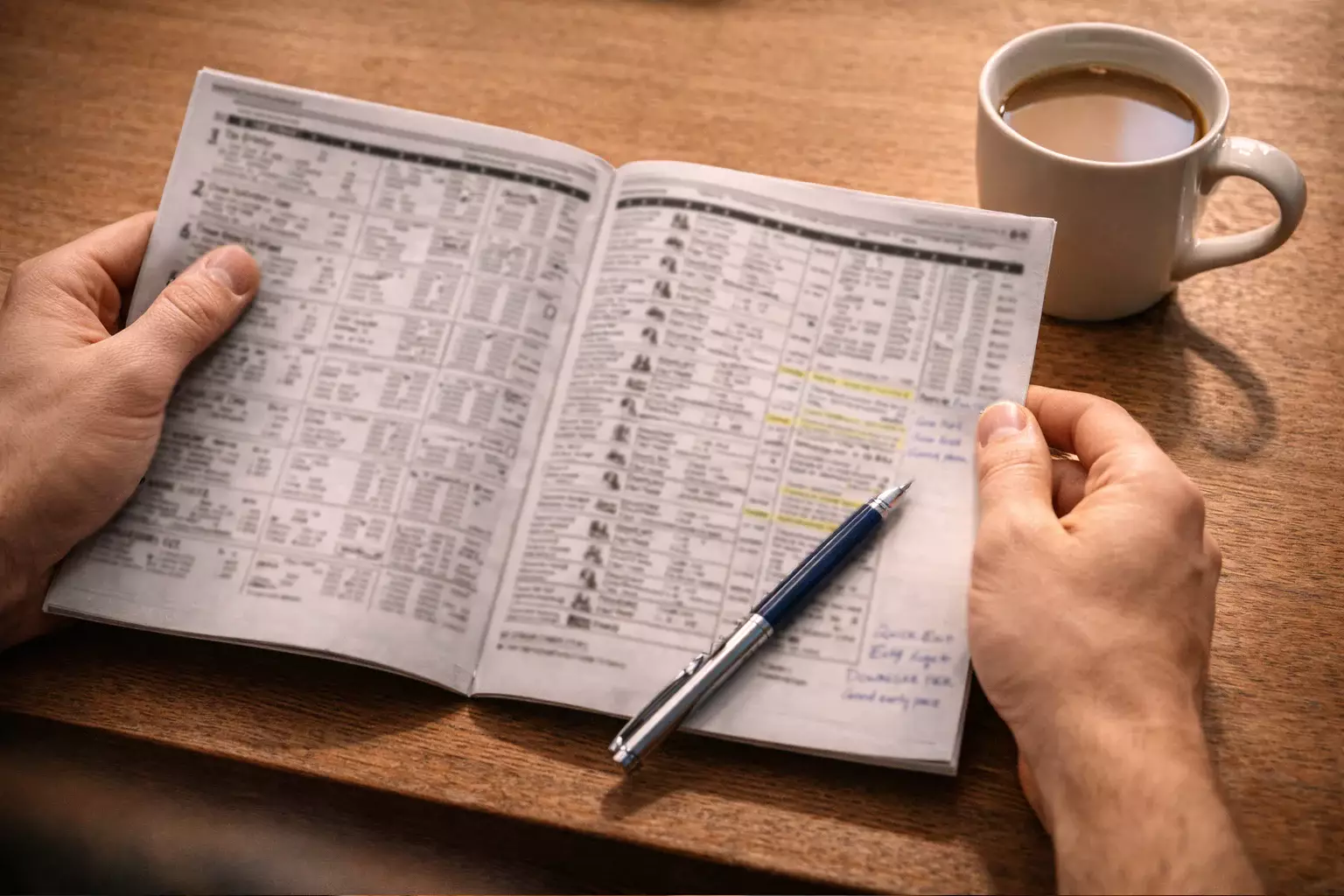
Finally, the starting price tells you where the market settled before the race. Comparing SP to the finishing position over a series of races reveals whether a dog is consistently over- or under-bet — a direct indicator of where value might exist in future markets.
Towcester Trap Statistics: Why Trap 1 Wins More Often
If every trap at Towcester were equal, each of the six positions would produce winners approximately 16.6% of the time. They are not equal. Trap 1 at Towcester wins roughly 20% of all races, a premium of more than three percentage points over the theoretical average. That edge is not a statistical fluke — it is a structural feature of the track.
The reason is geometry. Trap 1 sits on the inside rail, which gives the dog the shortest route to the first bend. On a track with bends as wide as Towcester's, that rail advantage is amplified: the dog in trap 1 only needs to maintain position through the bend, while dogs drawn wider must cover extra ground to reach the same point on the back straight. Over 260 metres, that extra ground can be decisive. Over 500 metres, the effect is diluted but still measurable.
Across all UK greyhound tracks, trap 1 typically wins between 18% and 19% of races, compared to the theoretical 16.6% for each of the six traps. Towcester sits at the higher end of that range, and the drop-off from trap 1 to the wider traps is steeper than average. Traps 5 and 6 — the wide runners — are measurably disadvantaged at Towcester, particularly on sprint trips where there is less time to recover from a poor position out of the first bend.
Why does this matter for betting? Because the market often underprices the trap 1 advantage. Casual bettors tend to focus on recent form or trainer reputation without adjusting for the trap draw, which means the starting price of a trap 1 runner is frequently longer than its true probability warrants. Over a large sample of bets, backing trap 1 runners at Towcester produces a measurable edge — not a guaranteed profit, but a persistent bias in the bettor's favour.
Conversely, dogs drawn in trap 5 or trap 6 need to be significantly better than their rivals on raw ability to overcome the positional disadvantage. A dog stepping up in grade from trap 1 at another track to trap 6 at Towcester is facing a double challenge: tougher opposition and a worse draw. Form students who fail to account for this will systematically overrate wide runners and underrate rail dogs.
Trap 1 at Towcester wins around 20% of races — roughly one in five. Factor the draw into every selection, and be especially cautious about backing wide runners on sprint distances where recovery time is minimal.
The trap bias also has implications for exotic bets such as forecasts and tricasts. If you are constructing a combination forecast, including trap 1 in your permutations at Towcester is almost always justified by the data. Excluding the rail runner to save on stake money may seem efficient, but the statistics suggest it costs more in missed dividends than it saves in outlay.
Top Trainers at Towcester: Wallis, Janssens, Hutton
Three names recur in Towcester greyhound results more than any others, and understanding their methods, kennel strengths, and track records is as important as knowing the trap stats. Trainers in greyhound racing operate at a level of influence comparable to horse-racing trainers — they select the races, manage fitness, choose the distance, and decide when a dog is ready to compete. At Towcester, the results are shaped disproportionately by Mark Wallis, Patrick Janssens, and Kevin Hutton.
Mark Wallis has been crowned Greyhound Trainer of the Year a record sixteen times, a streak of dominance that stretches across two decades. He claimed the title in 2005, 2008, 2009, and then ran off an extraordinary sequence from 2012 through 2019 before adding further titles in 2021 through 2025. In 2023, Wallis set a record points total of 1,591, which remains the benchmark. His Imperial Kennels operation was attached to Towcester from the track's opening in 2014 until 2018, giving him an intimate understanding of the surface, the gradient, and how different running styles cope with the uphill finish. "It was very much a transitional year for us, so to break more records is really satisfying," Wallis said of his record-extending 2023 campaign.
Patrick Janssens is the man who has beaten the odds in the biggest race at Towcester. He trained the 2021 Derby winner Thorn Falcon and the 2025 Derby winner Droopys Plunge, who landed the £175,000 prize at 10/1 as the only British-trained finalist in a field dominated by Irish challengers. The Janssens story has a direct connection to Wallis: Janssens served as kennel hand at Wallis's operation from 2005 to 2014, learning the trade from the most successful trainer in modern British greyhound racing before establishing his own licence. That apprenticeship is visible in Janssens's methodical approach to race selection and his willingness to target Towcester with dogs specifically prepared for the gradient.
Kevin Hutton completed a hat-trick of Towcester Trainers Championship titles in 2015, 2016, and 2017 — the track's formative years. While Hutton operates at a smaller scale than Wallis, his Towcester-specific record is difficult to ignore. Trainers who consistently win at a particular track tend to understand its quirks: how the going affects certain running styles, which traps suit their dogs, and how the grading system at that venue works in practice. Hutton's three consecutive titles suggest a level of track literacy that bettors should respect whenever his runners appear on the Towcester racecard.
For punters, trainer form at Towcester is a practical betting tool. When Wallis sends a dog to Towcester, it typically means the dog is suited to the track — he is not the type to waste a race. When Janssens enters a runner in an open race at Towcester, particularly over the Derby distance of 500 metres, the market should take notice. And when Hutton's runners appear in graded races, their strike rate at the venue has historically exceeded their market price.
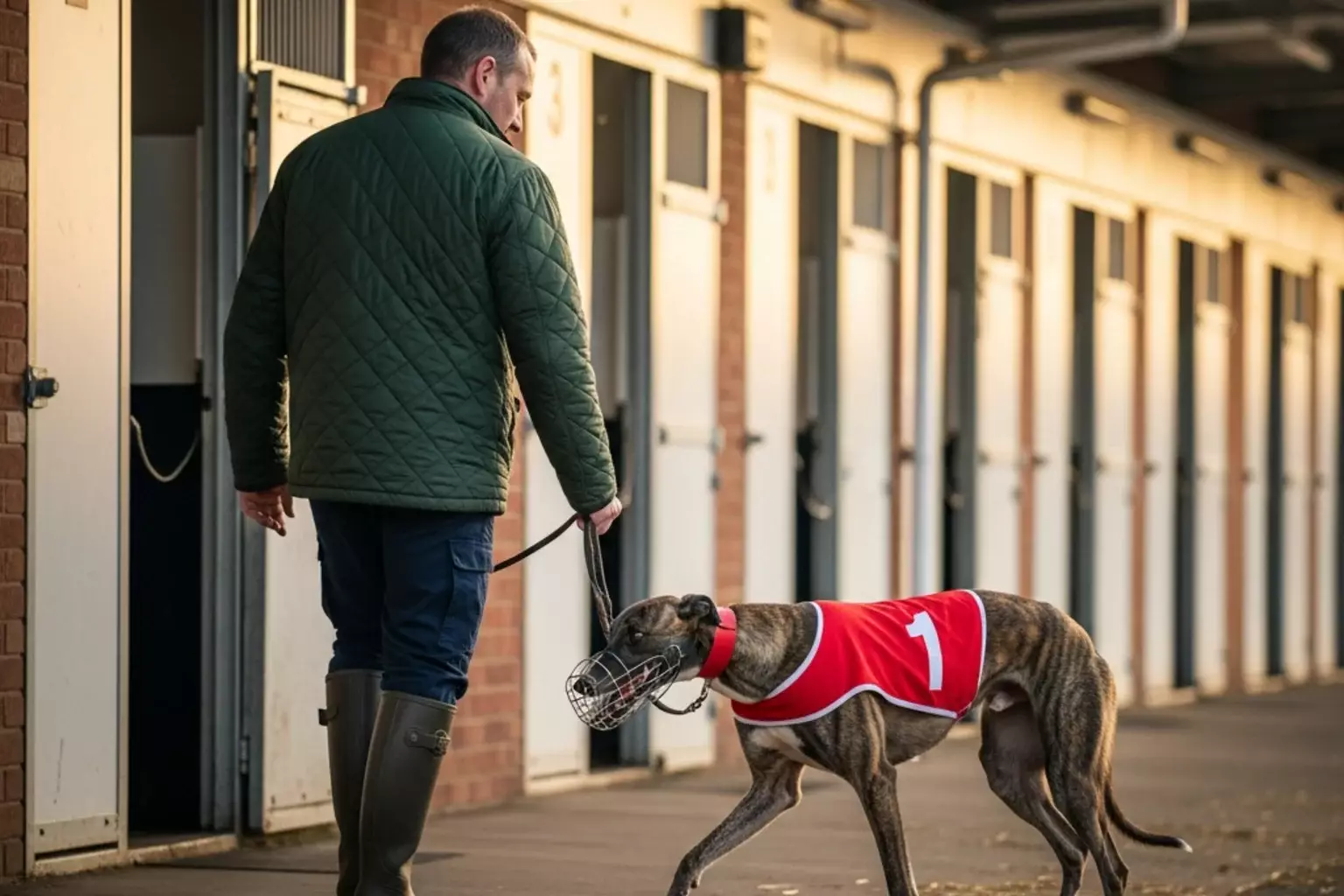
The trainers set the stage, but the richest act at Towcester plays out once a year. The English Greyhound Derby brings together the best dogs from Britain and Ireland — and the results consistently defy the formbook.
English Greyhound Derby at Towcester: The World's Richest Greyhound Race
The English Greyhound Derby is the single biggest event on the greyhound racing calendar — a Category 1 race that paid £175,000 to the winner in 2024 and 2025, with a contract to remain at Towcester through at least 2026. The 2026 renewal is set for a £125,000 winner's prize under joint sponsorship from Orchestrate and Star Sports. Kevin Boothby, the former Managing Director of Towcester Racecourse, described the Derby as "the pinnacle of greyhound racing worldwide," and even at the reduced purse, no other greyhound race on earth comes close to matching it.
The Derby first came to Towcester in 2017, moved away briefly, and returned permanently in 2021 after the closure of Wimbledon Stadium — the race's long-time home in south London. Since then, the event has grown in stature and controversy in roughly equal measure. The 2024 renewal attracted 193 entries, including 52 from Ireland and, for the first time, runners from the Welsh track Valley Greyhound Stadium. That breadth of entry underlines the Derby's status as a genuine international contest, not just a domestic affair.
The 2024 final was won by De Lahdedah, trained by Liam Dowling from Ireland. The winner equalled the track record with a time of 28.58 seconds — a mark that was subsequently lowered to 28.44 by Barntick Bear in October 2024, also trained by Patrick Janssens. De Lahdedah's victory was the third consecutive Irish-trained winner and the fifth in six years, a run of cross-channel dominance that has reshaped the betting landscape around the event.
In 2025, the pendulum swung back — just barely. Droopys Plunge, trained by Patrick Janssens, took the title at odds of 10/1, becoming the sole British-trained finalist in an otherwise all-Irish field. That result captured two themes at once: the ongoing Irish strength in elite greyhound racing and the sheer unpredictability of the Derby final itself.
And unpredictability is the defining characteristic of this race. According to analysis by Greyhound News UK, only one outright favourite has won the Derby final in the last thirteen years — Jaytee Jet in 2016. Seven of those thirteen finals were won by dogs at starting prices of 5/1 or higher. The message for bettors is clear: in the Derby final, the formbook is a guide, not a guarantee. The compressed nature of the six-dog final, the pressure of the occasion, and the unique demands of the Towcester 500-metre trip combine to produce outcomes that frequently defy market expectations.
For the 2026 Derby season, the resurfaced track adds another layer of uncertainty. Dogs that trialled well on the old surface may need to readjust, and sectional times from preliminary rounds will carry more predictive weight than historical form. Punters approaching the Derby should treat it as a distinct puzzle — not simply an extension of regular Towcester graded racing.
Seven of the last thirteen Derby finals were won by dogs priced at 5/1 or longer. Backing the favourite in the Derby final has been a losing proposition for over a decade.
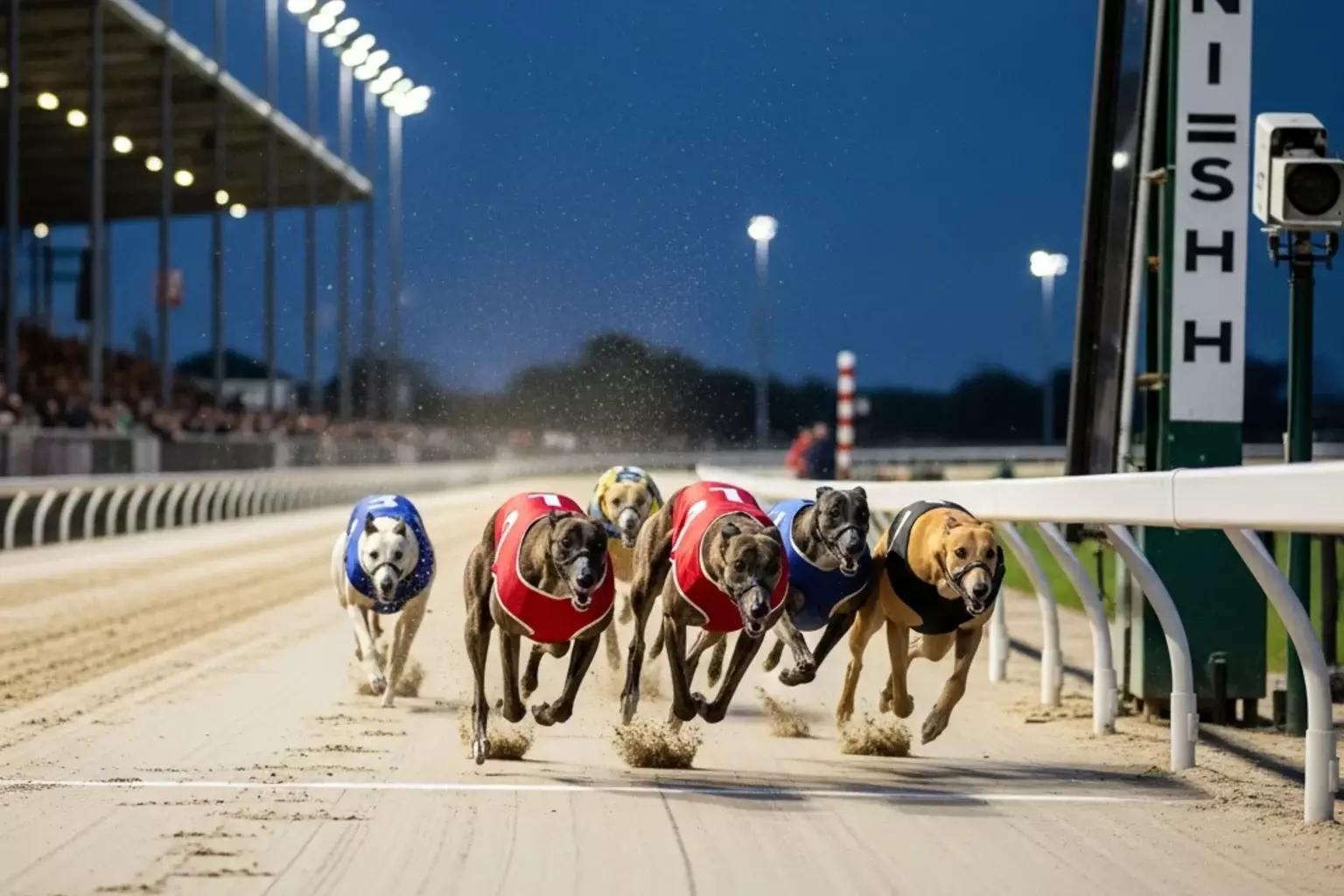
The Derby also affects everyday Towcester results. In the weeks leading up to the event, trial races and early rounds bring higher-quality runners to the track, which temporarily inflates times and reshapes the grading landscape. Dogs competing in regular graded meetings immediately before or after the Derby may face stronger opposition than their grade suggests.
Towcester Race Schedule: Five Meetings a Week Under PGR
Under the previous management, Towcester ran four meetings a week — typically on Tuesday, Thursday, Friday, and Sunday. Since the Orchestrate takeover in November 2025, the track has moved to five meetings per week operating under the PGR (Premier Greyhound Racing) banner. That is a significant increase in output and places Towcester among the busiest greyhound venues in the country.
PGR meetings carry a different status from the older BAGS (Bookmakers' Afternoon Greyhound Service) model that previously supplied much of the schedule. PGR is the commercial arm that negotiates media rights and scheduling with bookmakers, and its meetings tend to attract wider coverage across betting platforms. For punters, the practical difference is access: PGR races are available to bet on through all major UK bookmakers, both online and on-course, with full SIS (Satellite Information Services) streaming.
Each meeting at Towcester typically features between 10 and 13 races, with a mix of graded events across the available distances. Evening meetings usually begin around 18:00 or 19:00, while afternoon cards start earlier. The exact schedule varies week to week, and the definitive source for upcoming fixtures is the GBGB racing calendar and the major racecard providers. With five meetings a week producing upwards of 50 races, the volume of Towcester dog results data available for form study is substantial — more than enough to identify patterns in trap bias, trainer form, and going trends over rolling periods of a few weeks.
The shift to five meetings also has implications for the dogs themselves. More meetings mean more grading opportunities, quicker turnaround between races, and a faster cycle of form. Dogs that ran well on Tuesday may reappear on Friday, and their condition can change rapidly in that short window. Punters who only check results once a week risk missing form shifts that more attentive bettors will spot.
Looking ahead through 2026, Towcester's calendar will also include the Derby heats and preliminary rounds in the summer months, open races that attract runners from outside the regular Towcester grading pool, and occasional special meetings. The five-day weekly base schedule ensures there is rarely a day without fresh data from the track.
Betting on Towcester Greyhounds: What the Numbers Say
Greyhound betting in the UK is a large but declining market. The broader gambling industry remains robust — total UK gross gambling yield reached £16.8 billion in the 2024–25 financial year, up 7.3% year-on-year — but greyhound racing is not sharing in that growth. According to Gambling Commission data reported by Racing Post, total UK betting turnover across all sports stood at £8.73 billion for the year ending March 2024 — a drop of 16.3% from the £10 billion recorded two years earlier. Greyhound-specific turnover has been hit even harder, falling roughly 23% in real terms over three years, driven primarily by the introduction of affordability checks that limit how much individual bettors can stake.
That shrinking market creates a paradox for informed punters. Less money flowing through greyhound markets means thinner liquidity and, at times, less efficient pricing. When a market is less efficient, it is easier for someone with genuine data — trap statistics, trainer patterns, going adjustments — to find value. The flip side is that bookmaker margins on greyhound races tend to be wider than on horse racing, so the value threshold you need to clear before a bet becomes positive expectation is higher.
The British Greyhound Racing Fund (BGRF) is funded by a voluntary contribution of 0.6% of bookmaker turnover on greyhound racing, which generated £6.75 million in the 2024–25 financial year. That money flows back into the sport through prize money, welfare programmes, and track maintenance. For bettors, the existence of the BGRF means that a small fraction of every bet placed on Towcester dogs contributes to the infrastructure and welfare standards that underpin the sport itself.
When betting on Towcester specifically, there are three data-driven edges worth pursuing. First, the trap bias: as outlined above, trap 1 wins roughly 20% of races, and this advantage is particularly pronounced at sprint distances. Second, trainer signals: entries from Wallis, Janssens, or Hutton at Towcester carry more weight than average because these trainers know the track intimately. Third, the going adjustment: in the spring 2026 season, following the 300-tonne sand addition, going conditions are likely to run slower than historical norms until the surface settles, which will compress time differentials and potentially create opportunities for dogs with proven stamina.
Exotic bets — forecasts and tricasts — are where greyhound punters can unlock the biggest returns. A straight forecast requires predicting the first and second dog in order; a tricast requires the first three. Given the inherent unpredictability of greyhound racing, the payouts on these bets can be substantial. At Towcester, combining trap bias data with trainer form gives you a structured way to narrow the permutations and stake more efficiently.

The UK greyhound betting market has shrunk by 23% in three years, but thinner liquidity can mean less efficient prices. Punters with data — trap stats, trainer form, going knowledge — are better positioned than ever to find value at Towcester.
Greyhound Welfare at Towcester and Across the UK
Greyhound welfare is the issue that shadows every conversation about the sport, and any honest guide to Towcester dog results needs to address it directly. The data from 2024 shows genuine progress. GBGB reported 3,809 injuries from 355,682 individual race runs — an injury rate of 1.07%, the lowest since records began. The on-track fatality rate fell to 0.03%, half the level recorded in 2020. And economic euthanasia — the practice of destroying healthy greyhounds because rehoming was deemed too costly — has been reduced by 98% since 2018, with only three dogs put down for economic reasons in 2024 compared to 175 six years earlier. The retirement success rate now stands at 94%, up from 88% in 2018.
Mark Bird, Chief Executive of GBGB, described the trajectory as encouraging: "It shows that the initiatives we have introduced in recent years are now embedded and are helping to consolidate the significant progress we have made since 2018 across all measures."
These figures deserve context. While the percentages are moving in the right direction, the absolute numbers are not trivial. A parliamentary Early Day Motion tabled in 2025 noted that between 2017 and 2024, more than 4,000 greyhounds died or were euthanised and over 35,000 injuries were recorded across the licensed industry. Critics argue that any sport in which animals are injured at this scale requires ongoing scrutiny regardless of the improving trend line. The gap between the industry's statistical narrative and the animal welfare perspective remains one of the most contested aspects of greyhound racing in the UK.
At Towcester specifically, the 2025 surface overhaul was partly motivated by welfare concerns. The addition of 300 tonnes of fresh sand and the upgraded maintenance regime are designed to reduce the risk of muscular and skeletal injuries caused by inconsistent or worn-out surfaces. Wider bends — a design feature of the track since its 2014 construction — also reduce the likelihood of crowding injuries on the first turn, which is where the majority of racing incidents occur in greyhound sport. The financial infrastructure supporting welfare has also grown: since the launch of the Greyhound Retirement Scheme (GRS) in 2020, more than £5.6 million has been paid to homing centres, helping to rehome over 12,500 greyhounds.
The UK currently operates 18 licensed GBGB stadiums. Scotland no longer has any active tracks following the closure of Shawfield in 2020, and Wales has only one — Valley Greyhound Stadium — which faces a legislative ban. The regulatory picture is evolving: England's government has confirmed it has no plans to ban the sport, while devolved administrations in Wales and Scotland are moving in the opposite direction. For bettors, the welfare landscape is relevant not as an abstract moral question but as a concrete factor in the sport's future viability and, by extension, the long-term availability of Towcester greyhound results and betting markets.
Frequently Asked Questions
How do I read Towcester greyhound results?
Each Towcester result line includes the finishing position, trap number, dog name, finishing time, calculated time, sectional splits, starting price, weight, distance beaten, and a raceform comment. The most important figure for form study is the calculated time, which adjusts the raw clock time for going conditions so that performances across different race days can be compared on a like-for-like basis. Sectional times reveal whether a dog is an early-pace runner or a closer, which matters enormously at Towcester because the 6-metre gradient to the finishing straight punishes front-runners that go too fast too early. The raceform comment adds qualitative context — noting interference, wide running, or trouble at the first bend — that raw times cannot capture. To get the most from Towcester results, always check the going on the day, compare calculated times rather than raw times, and read the sectional data to understand how the race unfolded rather than just who finished where.
Which trap wins most at Towcester?
Trap 1 wins approximately 20% of all races at Towcester, which is well above the theoretical average of 16.6% for a six-trap race. The inside rail position gives the dog the shortest path through the first bend, and on a track with bends as wide as Towcester's, that positional advantage is amplified. The bias is most pronounced at sprint distances — especially the 260-metre trip — where there is minimal time for wider-drawn dogs to recover lost ground. Traps 5 and 6 are the most disadvantaged. When studying Towcester dog results, always factor the trap draw into your assessment of a dog's performance: a win from trap 6 is more impressive than the same margin from trap 1, and a poor run from trap 5 may not reflect the dog's true ability.
What days does Towcester greyhound racing take place?
Since the transition to Orchestrate management in November 2025, Towcester hosts five meetings per week under the PGR (Premier Greyhound Racing) schedule. The previous regime ran four meetings weekly, typically on Tuesday, Thursday, Friday, and Sunday. The current five-day schedule means fresh Towcester greyhound results are available almost every day of the week, with each meeting featuring between 10 and 13 races across the range of distances. Exact days and first-race times vary, so the most reliable source for upcoming fixtures is the GBGB racing calendar or major racecard providers such as Timeform and Sporting Life. Evening meetings generally start around 18:00 to 19:00, while afternoon cards kick off earlier.
