
UK Greyhound Betting Turnover: Why the Market Is Shrinking
 Available in US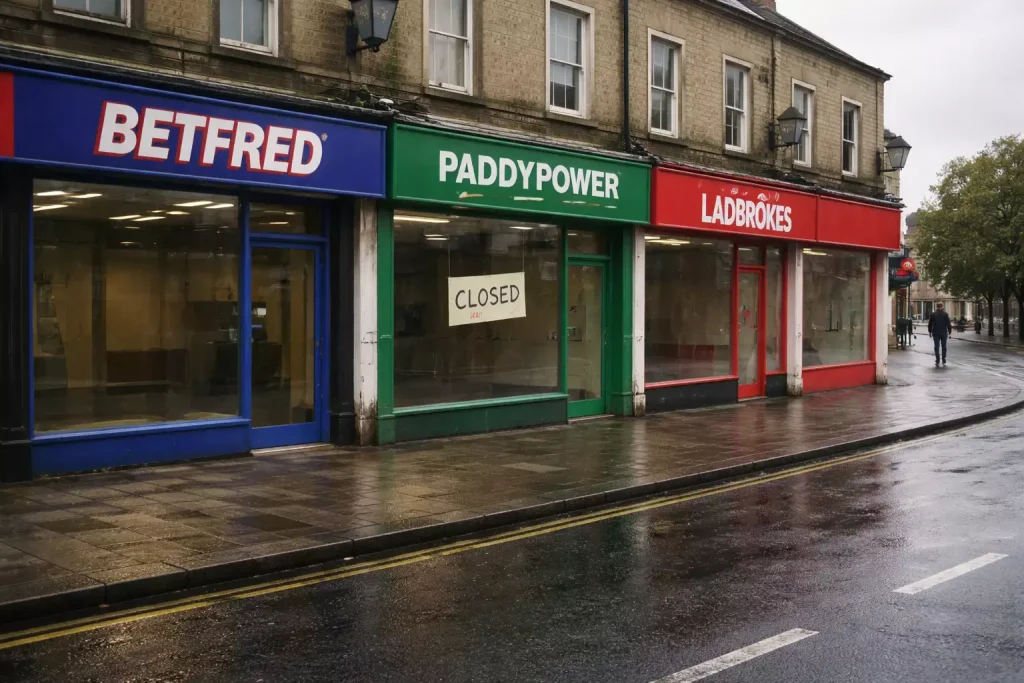
The wider context is set out in our Towcester dog results guide.
The Numbers: UK Betting Turnover 2021–2026
The headline figure comes from Gambling Commission data published via Racing Post: total UK betting turnover across all sports for the year ending March 2026 was £8.73 billion, down 16.3% from the £10 billion recorded in 2021-22. Greyhound racing’s share of that turnover fell faster than the average, with a 23% decline in real terms (adjusting for inflation) over the same period.
To put those numbers in context, the overall UK gross gambling yield (GGY) — the amount retained by operators after paying out winnings — actually rose during the same period, reaching £16.8 billion in 2026-25, a 7.3% increase on the previous year. The divergence between falling turnover and rising GGY reflects a shift in the gambling market: operators are retaining a larger share of a smaller pie, partly because higher-margin products (online casino, in-play betting on football) are growing while lower-margin products (traditional sports betting, including greyhounds) are shrinking.
Online sports betting on horse racing generated £766.7 million in GGY during the same period. Greyhound racing’s equivalent figure is not broken out separately in the Gambling Commission statistics, but industry estimates place it at a fraction of that — consistent with a sport that receives far less broadcast exposure, media coverage and punter attention than its equine equivalent.
The three-year decline is not evenly distributed across all segments of the greyhound market. Off-course betting — wagers placed in high-street betting shops and online — has been hit hardest, partly because shop footfall has declined nationally and partly because online operators have reduced their greyhound coverage in favour of more profitable products. On-course betting — wagers placed at the track — has been more stable, because it is driven by a core audience that attends meetings regardless of market conditions. But on-course turnover is a small fraction of the total, so its stability does little to offset the off-course decline.
The shift in operator strategy is particularly telling. Major bookmakers increasingly allocate their broadcast rights budgets and marketing spend toward football, horse racing and emerging products like in-play micro-betting. Greyhound racing, which once occupied a central position in the betting shop experience, has been gradually deprioritised. Fewer screens, fewer promotions and reduced market depth all contribute to a product that generates less turnover per meeting than it did five years ago — even where the quality of the racing itself has not declined.
Affordability Checks: The Main Driver of the Decline
The single largest factor behind the turnover decline is the introduction and tightening of affordability checks by the Gambling Commission. These checks require operators to verify that customers can afford their level of gambling, using income data, spending patterns and trigger thresholds. When a customer’s betting activity exceeds certain levels, the operator must intervene — by requesting financial documentation, imposing deposit limits or restricting account access.
The checks are designed to protect vulnerable gamblers, and their public-health rationale is sound. But their impact on turnover is substantial and disproportionately affects products like greyhound racing, where a large portion of the customer base consists of regular, high-frequency bettors. A punter who places £50 per meeting across five Towcester meetings a week generates £250 in weekly turnover. Under tightened affordability rules, that level of activity can trigger checks that slow down or interrupt the betting experience, leading some customers to reduce their activity or migrate to less regulated markets.
The industry has been vocal about the consequences. The BGRF’s income, derived from a 0.6% voluntary levy on greyhound betting turnover, falls directly when turnover falls. Every percentage point of turnover decline translates into a percentage point of levy income decline, which in turn reduces the money available for prize funds, welfare programmes and track infrastructure. The connection is mechanical and immediate: less betting means less money for the sport.
The Gambling Commission’s position is that consumer protection takes precedence over industry revenue, and that the long-term sustainability of gambling depends on responsible practices rather than unchecked growth. That argument has merit, but it does not change the arithmetic facing greyhound racing: the sport is being funded by a revenue stream that is in sustained decline, and no replacement funding mechanism has been established.
What Shrinking Turnover Means for Tracks and Punters
The most visible consequence of falling turnover is the pressure on the BGRF’s finances. Income dropped from £7.3 million in 2023-24 to an estimated £7 million in 2026-25 — a 4% decline that continues a multi-year downward trend. The BGRF’s Chairman has described the situation in stark terms, noting that current income is a long way from the historic highs and that the fund would eventually reach a point where revenue could not sustain its ambitions.
The wider economics are set out in the industry revenue model.
For tracks, falling revenue means tighter budgets for everything from surface maintenance to hospitality facilities. The tracks that survive and thrive — Towcester among them — are the ones that invest strategically and diversify their income beyond the betting levy. Towcester’s 2026 surface overhaul and PGR schedule expansion are examples of proactive investment designed to attract higher-quality racing and maintain competitive relevance. Smaller, less well-capitalised tracks face harder choices: defer maintenance, reduce prize money, or close entirely.
For punters, the shrinking market has mixed effects. On one hand, less liquidity in the betting pools can mean wider price spreads and less efficient markets — which creates value opportunities for informed bettors. On the other hand, reduced investment in track maintenance and prize money can lower the quality of the racing product, making form less reliable and results more unpredictable. Fewer bookmakers offering greyhound markets means less competition on prices, which erodes the value that punters depend on.
The broader picture is one of a sport navigating a structural transition. Greyhound racing in the UK is not disappearing, but it is contracting to a smaller, more concentrated core of well-funded tracks and a dedicated but ageing customer base. The punters who remain — the ones who study form, understand trap bias, adjust for going and follow the data — are precisely the audience the sport needs to retain. Whether the industry can sustain their interest while its financial base continues to erode is the central question facing UK greyhound racing in 2026 and beyond.
